
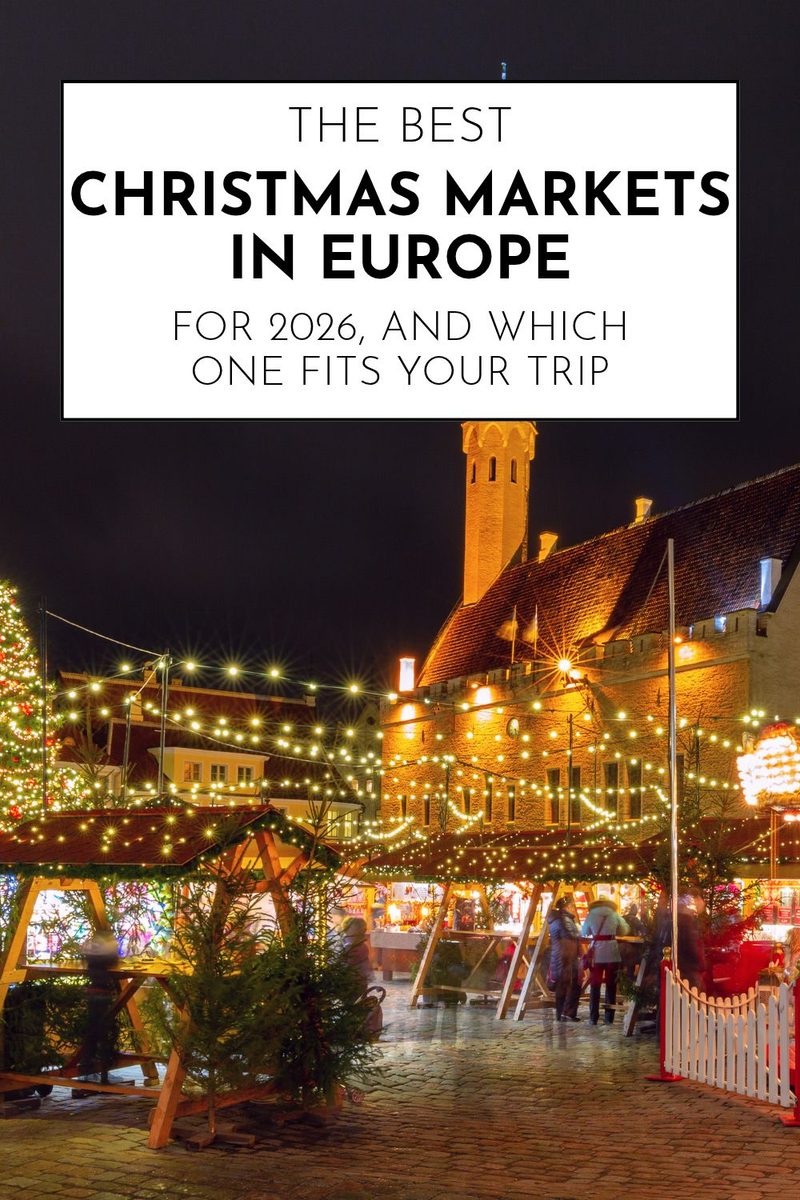
Some people go for the shopping. Most of us go for the hot mug, the smell of roasting almonds and the moment the lights flick on over a square that’s been there for 500 years. If you’re planning around christmas markets europe 2026, these ten are the ones we’d build a trip on: Vienna for a first visit, Strasbourg for size, Colmar for the canals, Nuremberg for tradition, and Prague if you can only travel after Christmas. Dates, food, prices and train routes are all below.
Which Christmas market fits your trip?
Honestly, there’s no bad pick on this list. They’re just good at different things, so the quick table below matches each one to the kind of trip it suits best.
| If you want… | Go to | Why |
|---|---|---|
| An easy first trip | Vienna | Several markets inside one walkable center, and coffee houses to warm up in |
| The biggest show | Strasbourg | A market that has run since 1570 and takes over the whole island |
| Somewhere small and pretty | Colmar | Five markets in a town you can cross on foot in 20 minutes |
| Old German tradition | Nuremberg | The Christkind opens it from a church balcony |
| Stollen and history | Dresden | Germany’s oldest market, now in its 592nd year |
| The quickest arrival | Cologne | The market is a two-minute walk from the main station |
| Markets open after Christmas | Prague, Budapest, Salzburg, Copenhagen | All four run into January 2027 |
| Kids in tow | Copenhagen | Tivoli is an amusement park first and a market second |
If you made us choose one trip, it would be three nights in Vienna and then the train on to Salzburg or Budapest. No car, no flights in between.
When do Christmas markets open in Europe in 2026?
The short answer is the second half of November, through to December 23 or 24. But four of these ten keep going into January, which matters if school holidays are the only time you can get away.
| Market | 2026 dates | How sure |
|---|---|---|
| Vienna, Rathausplatz | Nov 13 – Dec 26 | Official |
| Budapest, Advent Bazilika | Nov 13 – Jan 1, 2027 | Official |
| Copenhagen, Tivoli | Nov 13 – Jan 3, 2027 | Official, check Dec 24 |
| Cologne, cathedral | Nov 16 – Dec 23 | Several sources |
| Salzburg, Domplatz | Nov 19 – Jan 1, 2027 | Several sources |
| Colmar, old town | Nov 23 – Dec 29 | Several sources |
| Dresden, Striezelmarkt | Nov 25 – Dec 24 | Several sources |
| Strasbourg, old town | Nov 27 – Dec 24 | Expected |
| Nuremberg, Hauptmarkt | Nov 27 – Dec 24 | Official |
| Prague, Old Town Square | Nov 28 – Jan 6, 2027 | Expected |
Tip: aim for a Monday to Thursday in the first half of December. Everything’s open by then and the weekend coach crowds haven’t started.
01Vienna, AustriaThe Easy First Trip
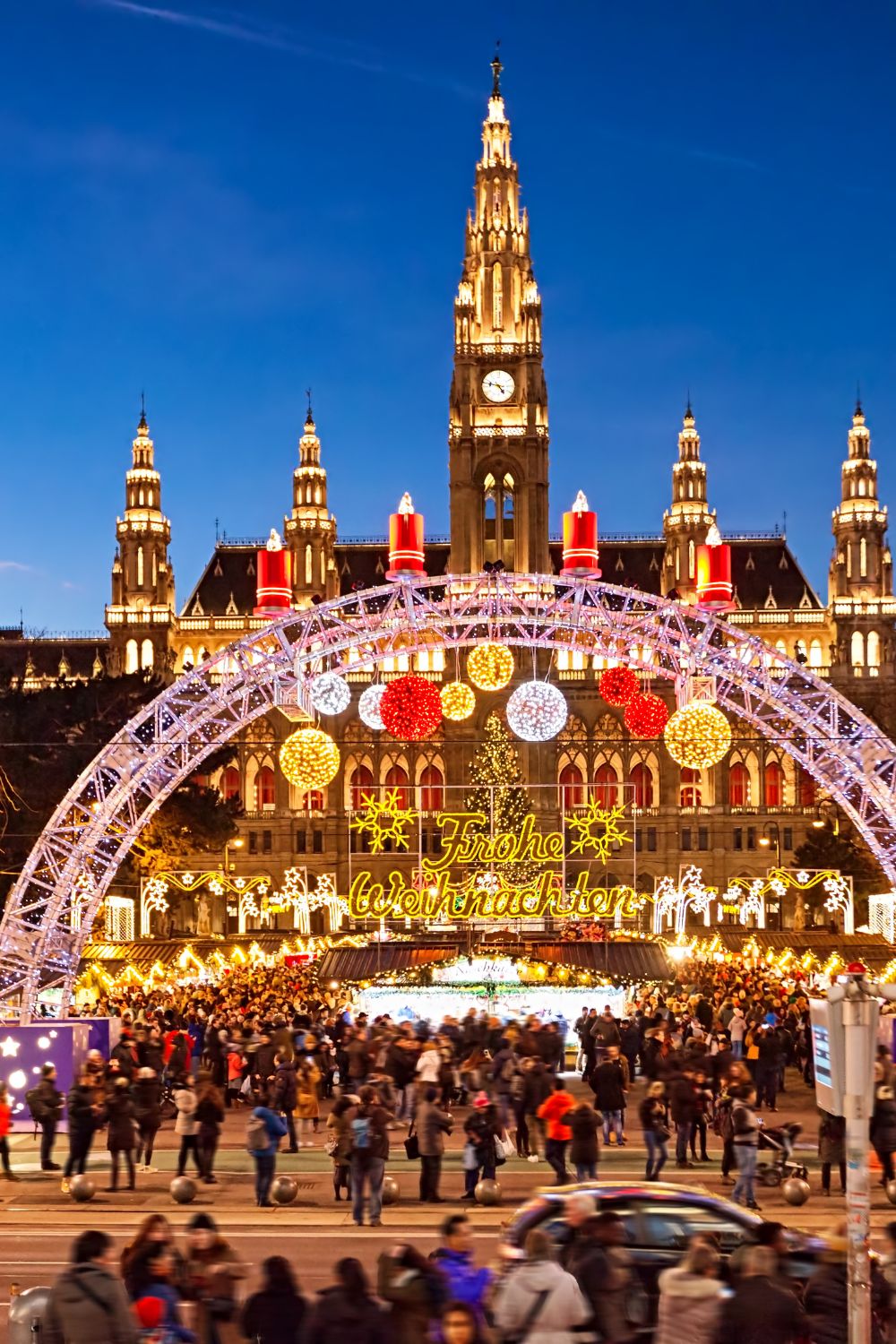
Vienna is a bit of a cheat, because it isn’t one market. It’s more like a dozen, and the biggest sits on Rathausplatz in front of the city hall, which looks like a Gothic cathedral somebody forgot to finish. The park trees are wrapped in lights, the Eistraum ice rink loops between them, and the drink is orange punch in a mug with the year on it.
We’d do Rathausplatz at lunchtime, when it’s half empty, and save the evening for Spittelberg, a few lanes of old Biedermeier houses where the stalls lean toward crafts. Schönbrunn Palace has one too if you want the imperial backdrop. Saturdays after 4 pm at the main market are hard work.
2026 dates and hours: November 13 – December 26, daily 10 am – 10 pm (until 6:30 pm on December 24). The rink keeps going to January 6, 2027.
One thing that’s changed this year: the City Airport Train isn’t running into town while its line is rebuilt, from August 2026 until the end of October 2027. A replacement bus goes from the airport to Wien Mitte, so give yourself longer than the old 16 minutes.
Tip: every mug comes with a deposit, usually 4 or 5 euros. Take it back for the cash, or keep it, since the design changes each year.
02Strasbourg, FranceThe One That Started It
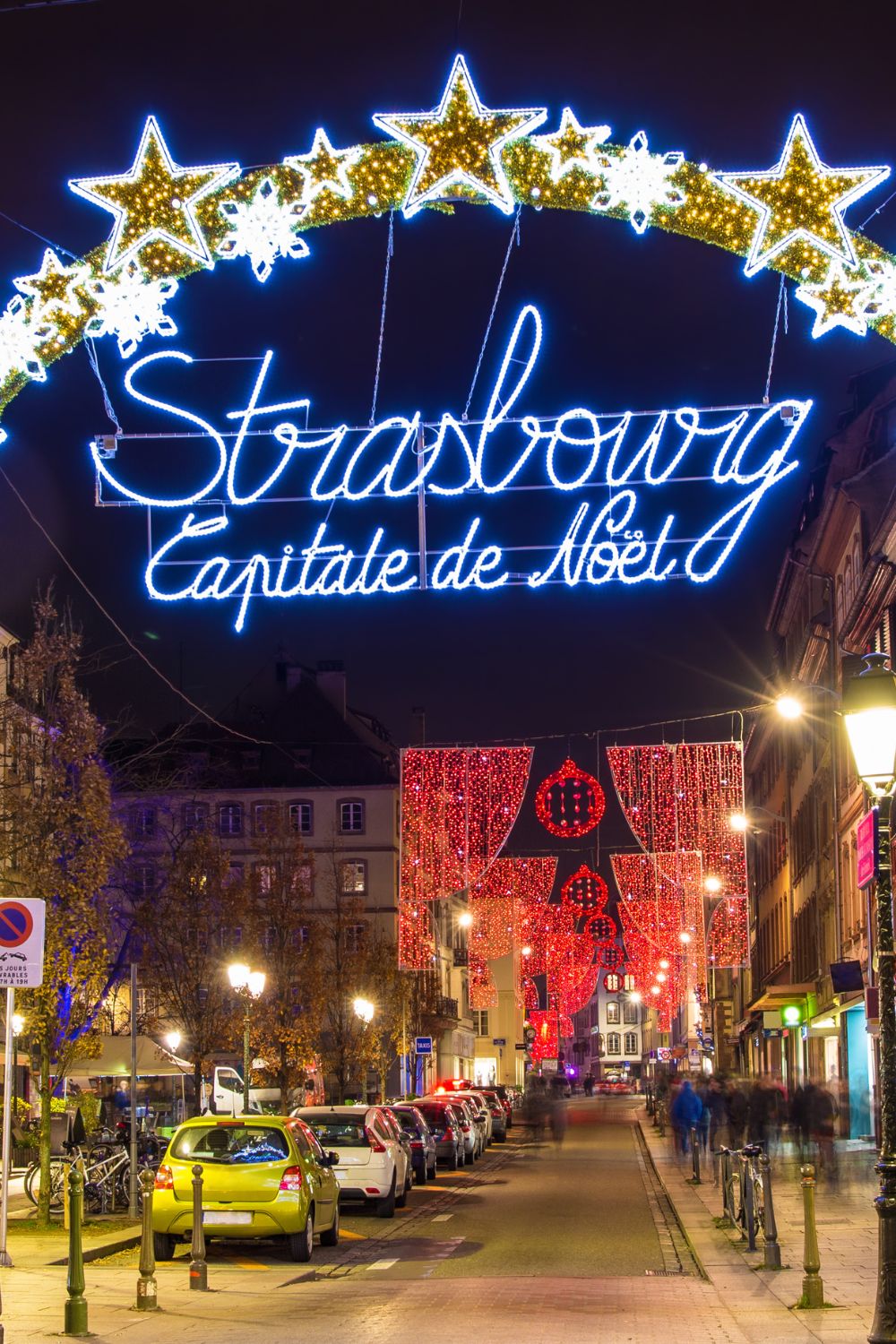
- That’s how long Strasbourg has been doing this, and it shows, because the city doesn’t hold a market so much as hand the whole old town island over to one. There’s a giant fir on Place Kléber, chalets packed around the cathedral, and white mulled wine instead of red, with bredele (little spiced Alsatian biscuits) on the side.
Is it worth the crowds? We think so, as long as you go in knowing. Police check bags on the bridges onto the island, hotels sell out early, and a Saturday evening can feel like a slow shuffle. A weeknight is far better, and once the stalls close it’s worth walking over to Petite France, the old tanners’ quarter, while it’s quiet.
2026 dates: expected November 27 – December 24. The city hadn’t finished its 2026 program in November, so check before booking anything non-refundable.
The fastest TGV from Paris Est takes about 1 hour 46 minutes.
03Colmar, FranceCanals and Half-Timbered Houses
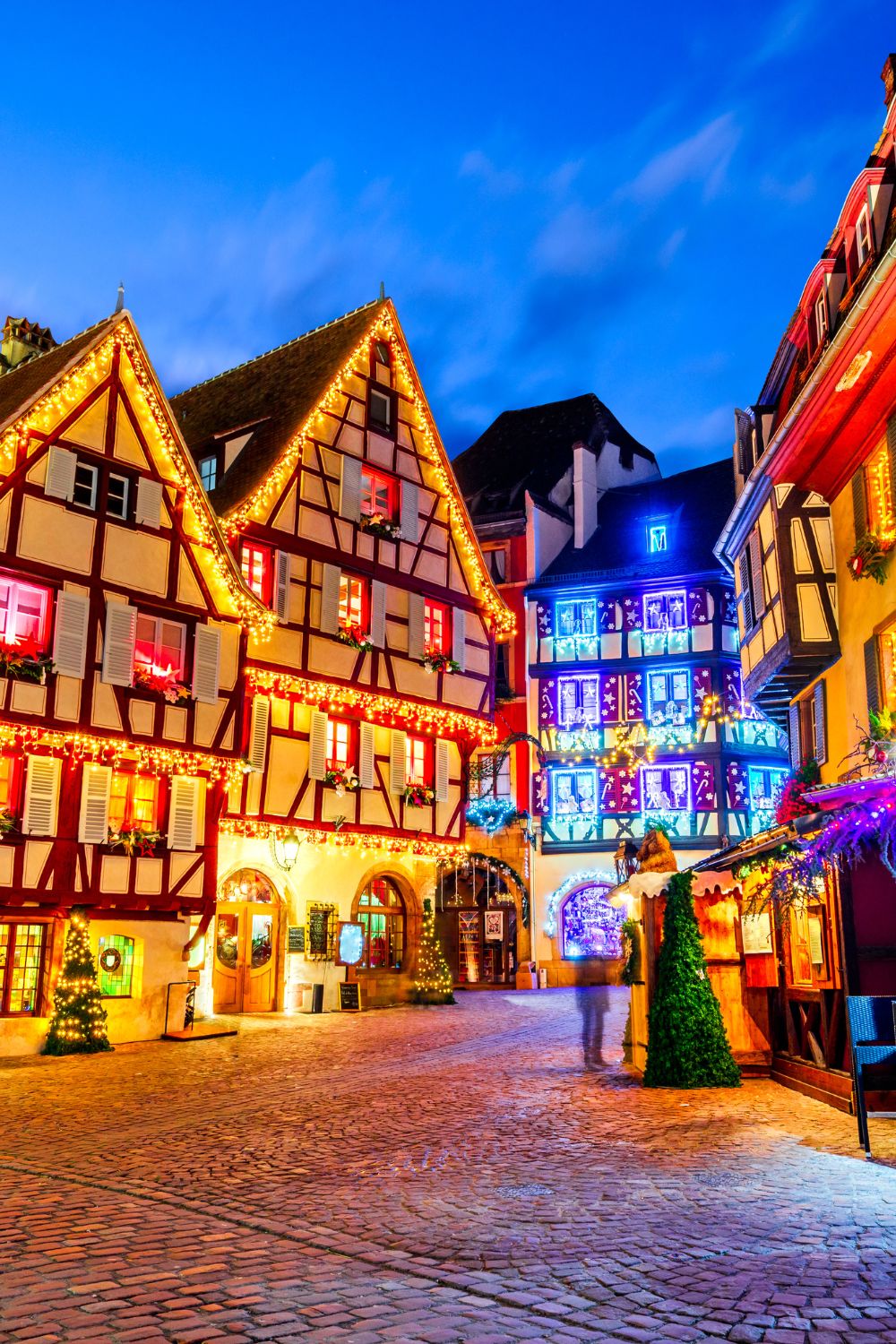
Colmar is what you’d draw if someone asked you to draw an Alsace Christmas. It’s half an hour south of Strasbourg, and its five markets are all within a few minutes of each other: one in the old customs house, one by the Dominican church, one on Place Jeanne d’Arc, one along the Little Venice canals and one in the Koïfhus. After dark the painted timber houses light up and reflect in the water.
Here’s the catch. The town is small and everybody in Strasbourg has the same idea, so a Saturday lunchtime in those narrow lanes is no fun at all. Stay over if you can and have Colmar to yourself in the evening, once the day-trippers have gone for their trains.
2026 dates: November 23 – December 29, free entry. The food market and big wheel on Place Rapp carry on to January 3, 2027.
Have a slice of kougelhopf, the ring-shaped brioche, and buy your vin chaud from a stall; the cafés charge more for the same thing.
04Nuremberg, GermanyTradition With Rules
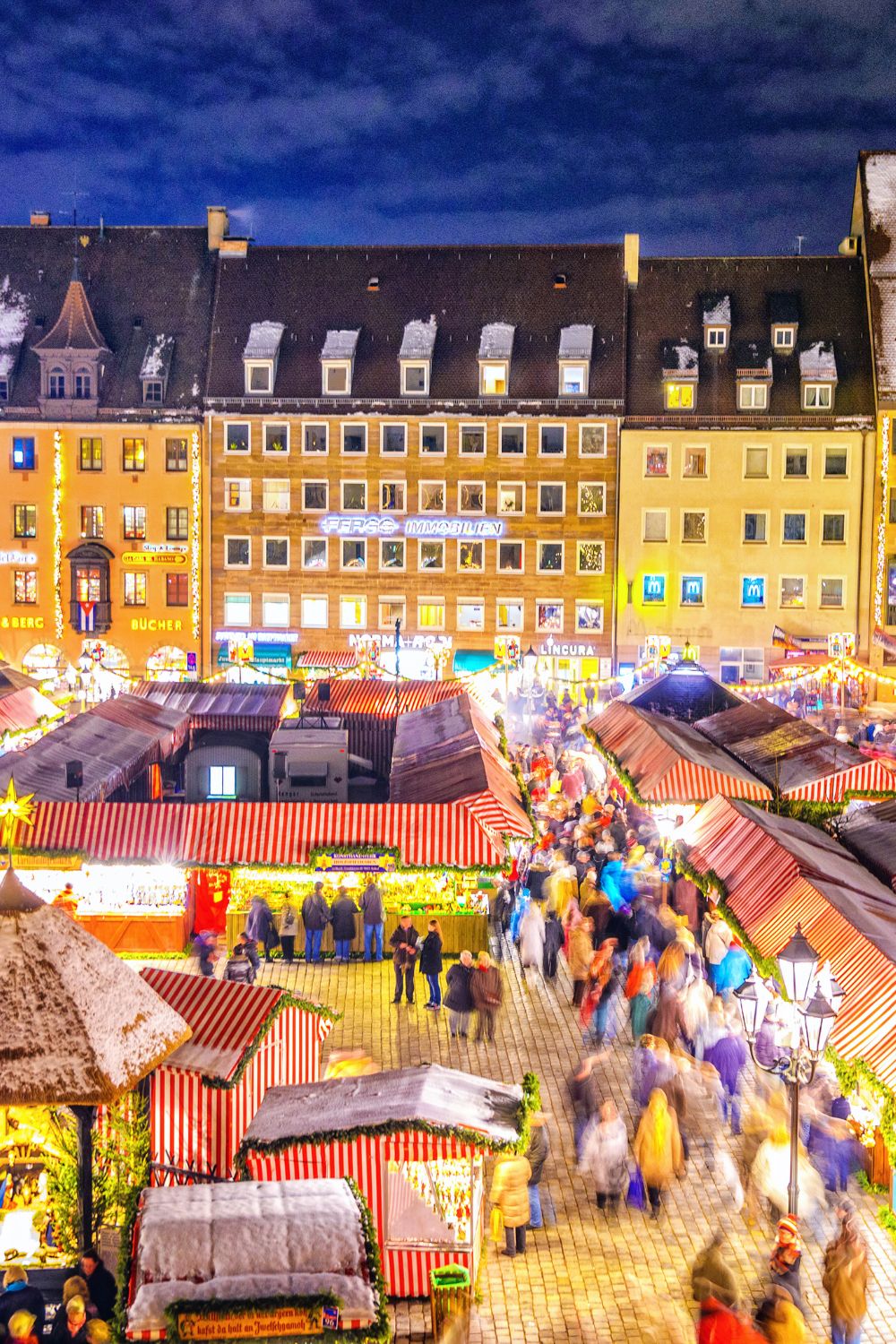
Nuremberg opens with a speech. On the Friday before Advent, the Christkind (a local young woman in a gold crown and white robes) reads a prologue from the balcony of the Frauenkirche to the crowd packed into the Hauptmarkt, and in 2026 that’s Friday, November 27, at 5:30 pm.
The market has rules on what stallholders can sell, which is why you’ll see more wooden toys and little figures made of prunes than plastic. Order drei im Weggla, three small Nuremberg sausages in a roll, and take some Lebkuchen home; the soft gingerbread has been a Nuremberg thing since the Middle Ages.
Opening night is the busiest night of the year, by a long way. Unless you’re set on the Christkind, the Monday after is a much nicer visit.
2026 dates: November 27 – December 24, about 10 am – 9 pm, and only until 2 pm on Christmas Eve. Munich is about an hour away on the fastest ICE.
05Dresden, GermanyThe Oldest One, and a Very Big Cake
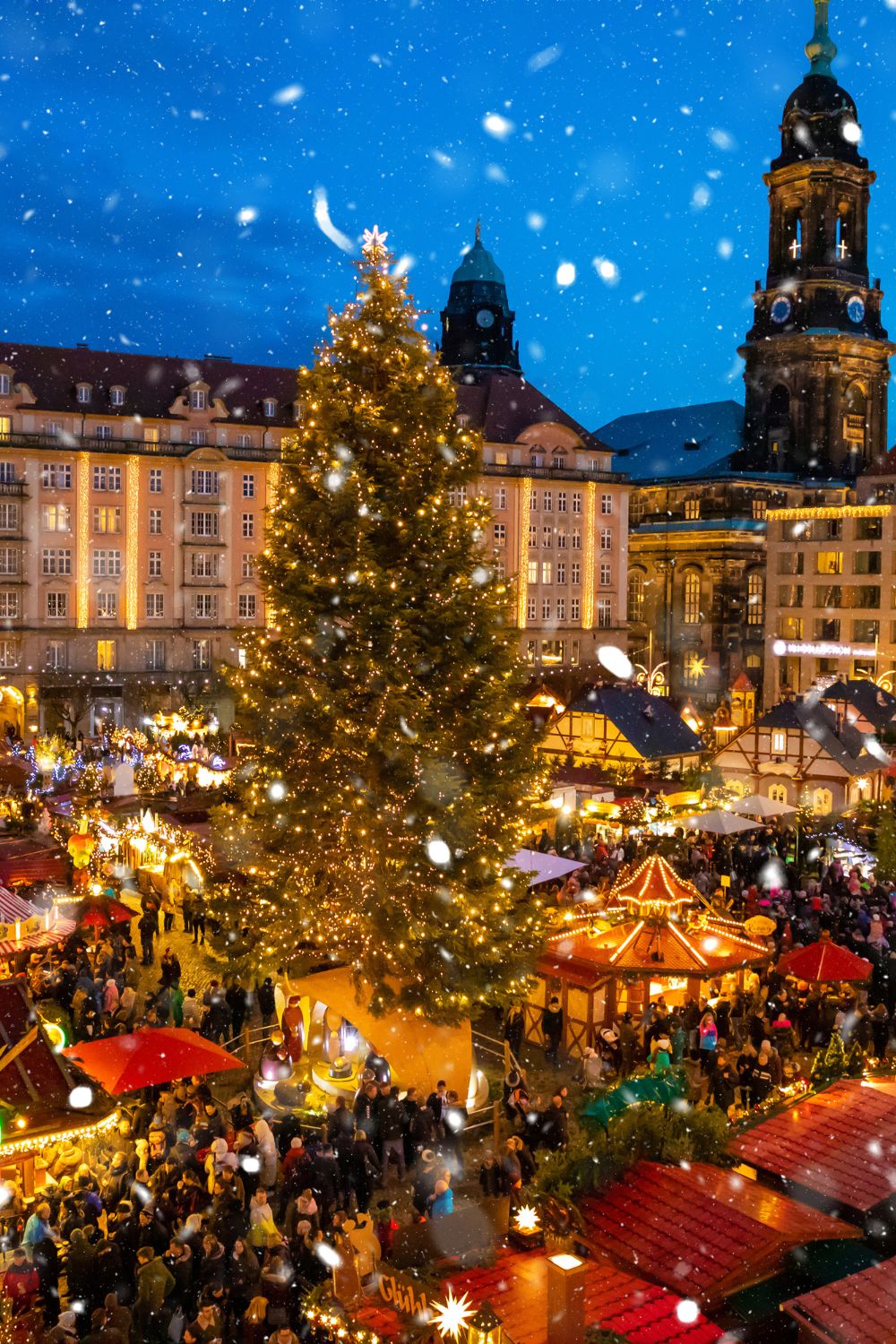
Dresden’s Striezelmarkt began in 1434, so 2026 is its 592nd year, which is a slightly ridiculous number when you say it out loud. It fills the Altmarkt with a huge wooden Christmas pyramid, turning slowly, and more Stollen than seems reasonable. The fruit bread is a point of local pride here.
Saturday, December 5, is the day to be in town if you can swing it. It’s the Stollenfest: a Stollen weighing over three tonnes gets paraded through the old town, then sliced up and sold.
2026 dates: November 25 – December 24, free to enter. Reported prices are around 4.50 euros for a glühwein, 3 for a slice of Stollen and 4 for a bratwurst (roughly US$5, $3.50 and $4.50, 2026).
There’s a medieval market in the courtyard of the Royal Palace stables as well, so we’d give Dresden a full day, not just an evening.
06Cologne, GermanyStraight Out of the Station
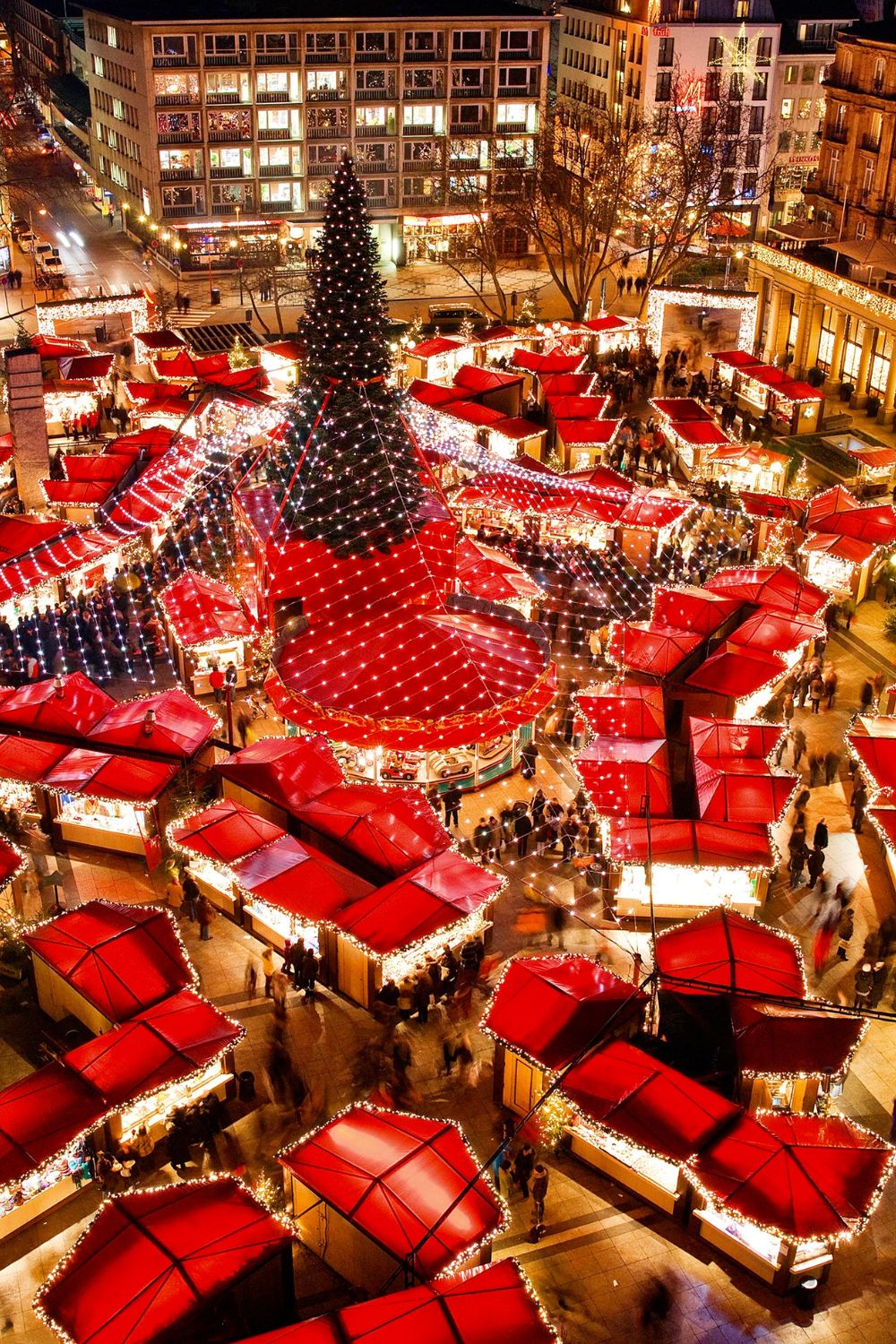
You walk out of the main station and the cathedral is just there, huge and sooty and a little overwhelming, with the market spread out under it on Roncalliplatz. You won’t find an easier arrival anywhere on this list. Look for Reibekuchen, crisp potato pancakes with apple sauce, and a small glass of the local Kölsch beer to go with them.
The ease cuts both ways, though. River cruise passengers come through in the middle of the day and the square can be shoulder to shoulder until mid-afternoon, so we’d turn up after 5 pm, once the lights are on and the cruise groups are back on their boats.
2026 dates: November 16 – December 23, closed on Sunday, November 22, a German day of remembrance.
Neumarkt and the old town by the Rhine have their own markets, both walkable. If you also want to go inside the cathedral, check its current entry rules first.
07Prague, Czech RepublicOpen Until January 6
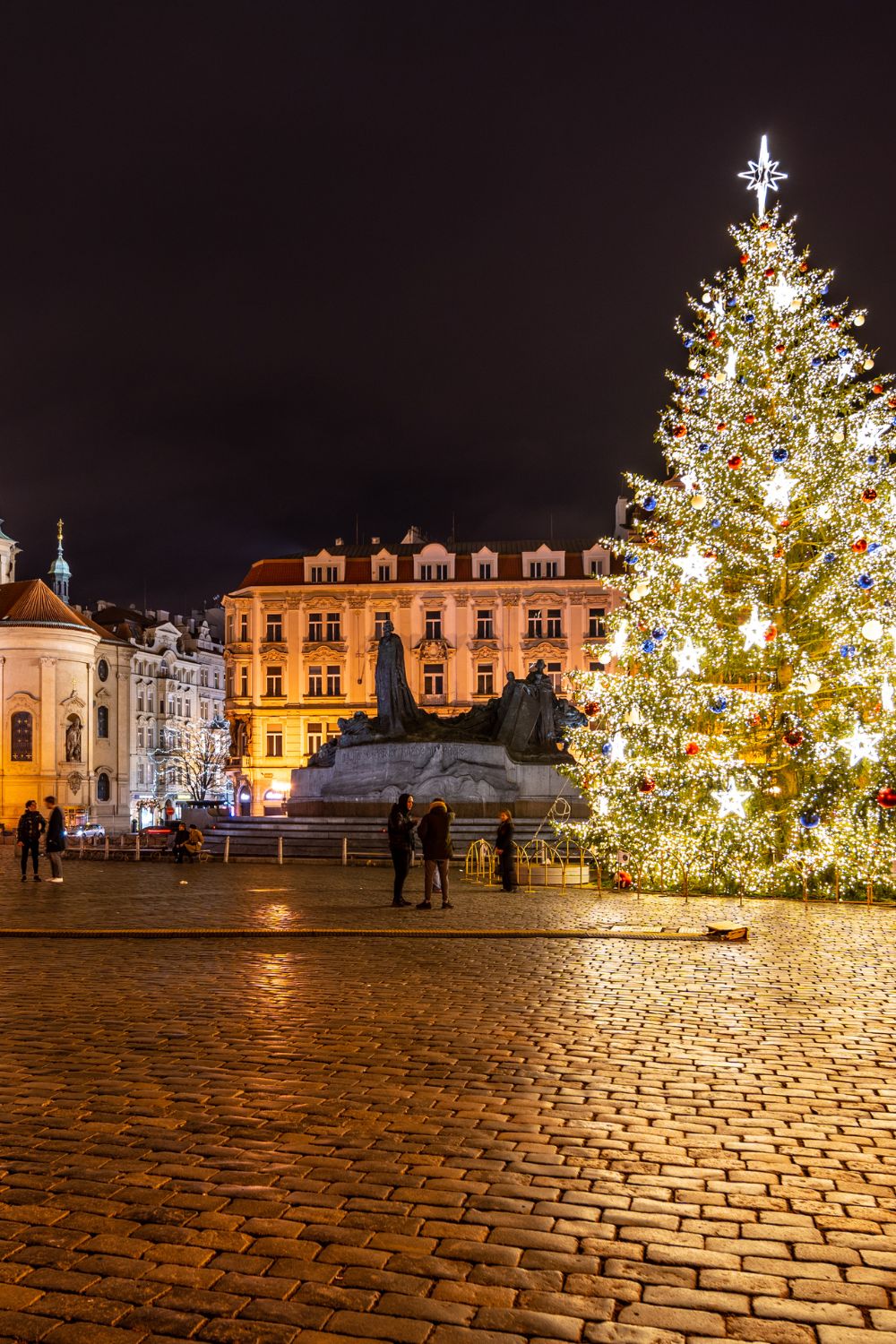
For a backdrop, Prague is hard to beat. On Old Town Square the two dark spires of the Týn Church rise behind the tree, the Astronomical Clock is around the corner, and the stalls do spit-roasted Prague ham, trdelník (the sugared spit cake) and mulled wine or hot mead.
Fair warning on the ham: it’s sold by weight, and the stalls on the main square are priced for visitors. Ask what 100 grams costs before they start carving. For something more local, the market at Náměstí Míru in Vinohrady is a short tram ride away.
2026 dates: expected November 28 – January 6, 2027, with the tree usually lit on opening day in the late afternoon.
Tip: go up the Old Town Hall tower just before dusk and watch the square fill and the tree come on from above.
08Budapest, HungaryLight Shows and Hot Baths
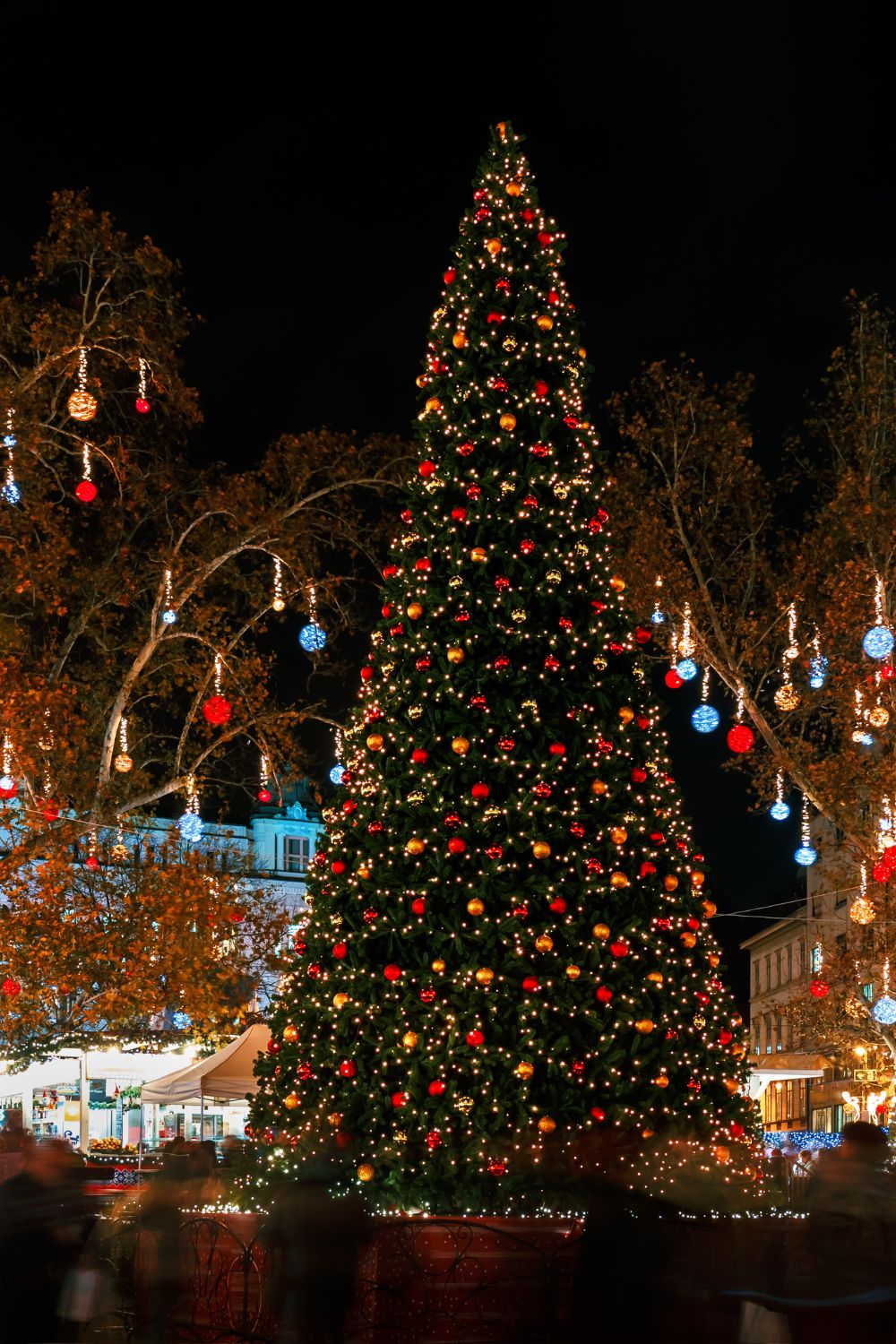
Cold feet? Budapest has the best fix on this list, which is to end the night in an outdoor thermal pool. The main market, Advent Bazilika, is in front of St. Stephen’s Basilica, with a light show on the facade every evening and an ice rink around the tree, and there’s a second big one on Vörösmarty Square.
Hungarian market food is heavier than Austrian, in a good way. Think lángos, fried dough piled with sour cream and cheese, stuffed cabbage out of enormous pans, and kürtőskalács, chimney cake baked over coals. Don’t eat lunch.
2026 dates: November 13 – January 1, 2027.
From the airport, the 100E bus takes about 40 minutes and costs 2,500 forints (about US$7, 2026). Normal city tickets don’t work on it.
Tip: Széchenyi’s outdoor pools stay open all year, and an hour in 38°C water after an evening on your feet is about as good as December gets.
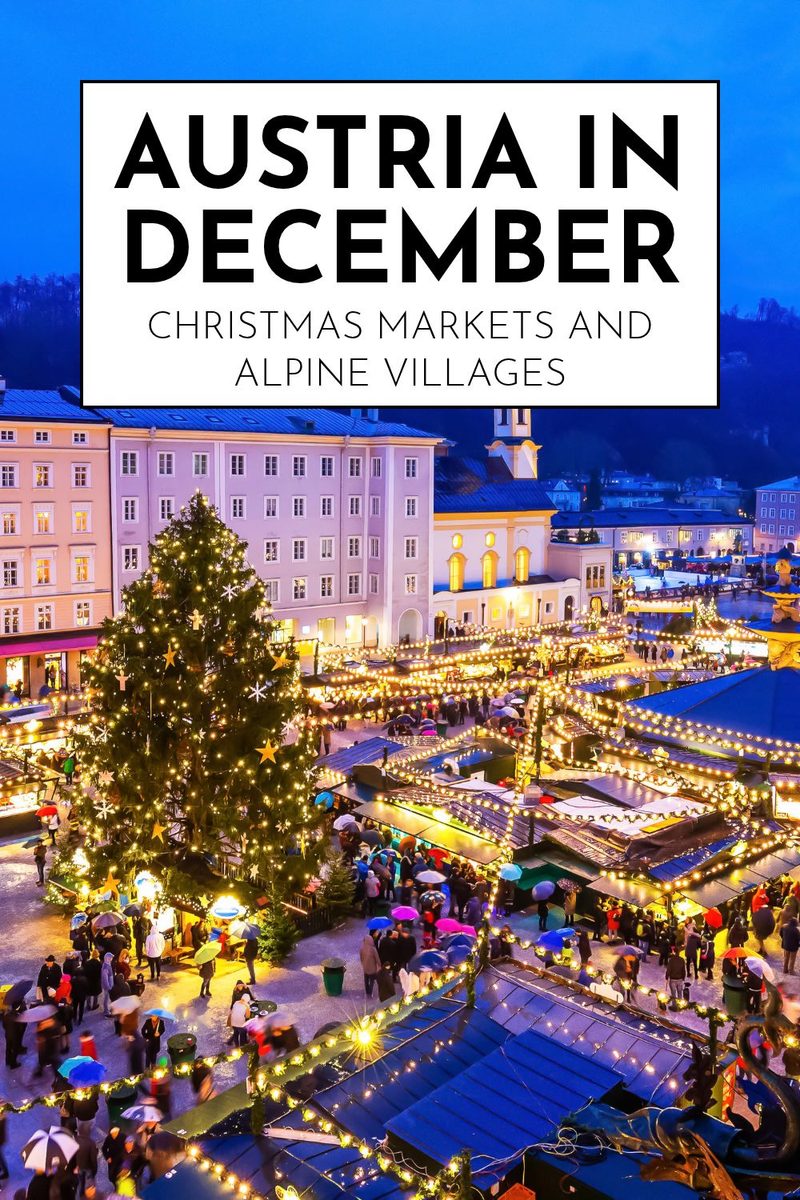
09Salzburg, AustriaChoirs, Fortress and Krampus
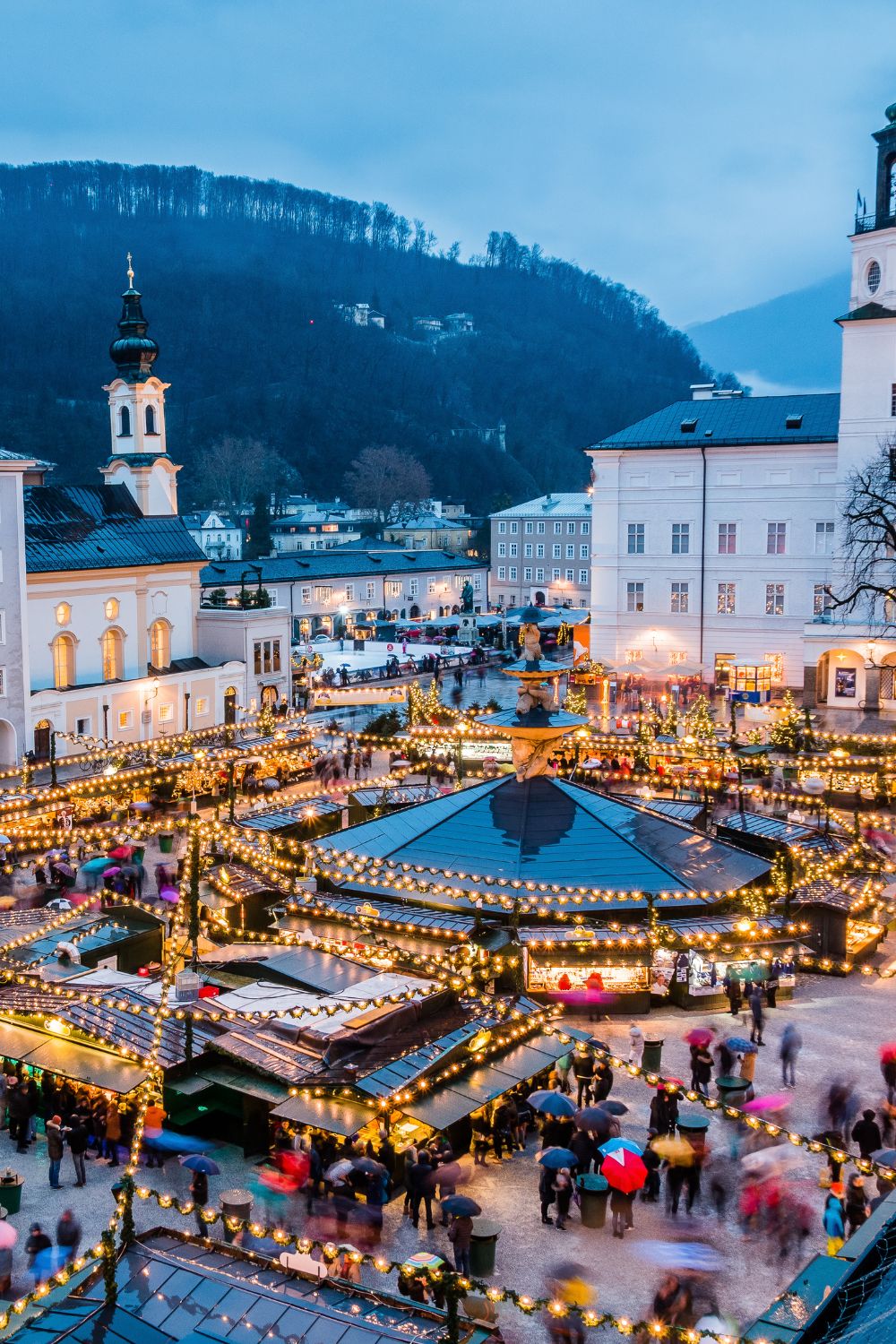
Fortress up on the hill, cathedral to one side, stalls filling Domplatz and Residenzplatz in between. Salzburg’s market is small and quite old-fashioned, with choirs and brass bands most evenings and its own street snack, the Bosna, a spicy sausage in bread with onions and curry powder.
Plan around December 5 if you can. It’s Krampus night, when men in horned wooden masks, fur and cowbells charge through the old town scaring children (and, let’s be honest, most grown-ups too). The market’s own Krampuslauf is at 1 pm this year, and there are more runs at 4 pm on Linzergasse and 5:30 pm on Getreidegasse. Small kids don’t always see the fun in it, so stand near the back the first time.
2026 dates: November 19 – January 1, 2027 by most accounts, though one official listing has a later start. It’s about 1 hour 30 minutes from Munich on the Austrian railjet.
10Copenhagen, DenmarkTivoli by Night
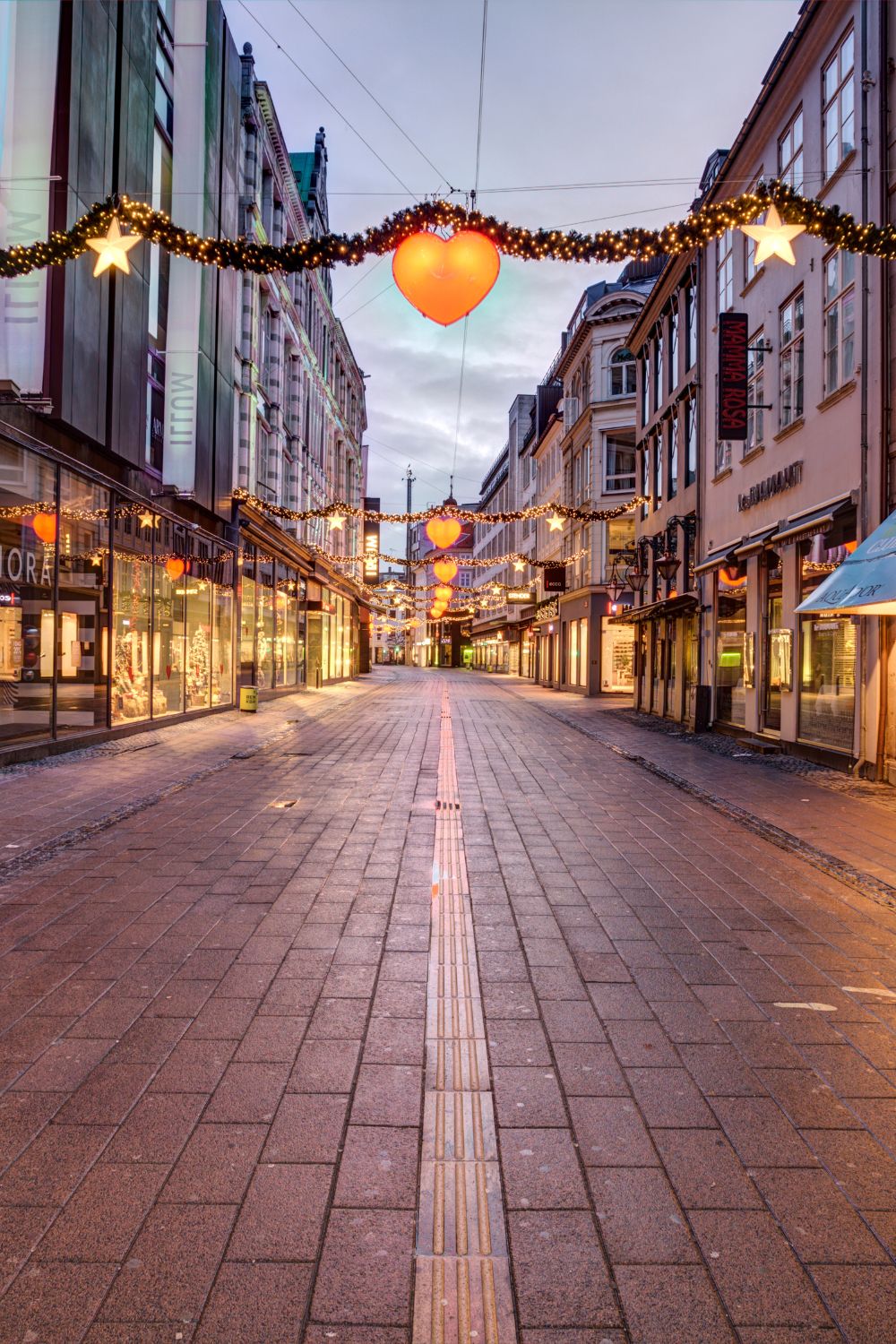
Tivoli has been across the road from Copenhagen Central Station since 1843, and at Christmas it becomes a garden of lit trees and old wooden rides, with stalls selling gløgg (Danish mulled wine with raisins and almonds in it) and æbleskiver, little round pancakes you dip in jam.
If you have children with you, this is the one. It’s an amusement park first and a market second. It’s also the only place here you pay to get in: guides put adult entry at about 180 to 210 Danish kroner (around US$28–32, 2026), but Tivoli hadn’t confirmed this year’s price, and rides cost extra.
2026 dates: November 13 – January 3, 2027. Sources don’t agree on Christmas Eve, so check Tivoli’s own calendar if December 24 is in your plans.
Don’t want to pay? Walk down to Nyhavn, the old harbor, where the stalls are free and the colored houses look their best lit up.
What does a Christmas market trip cost?
The markets themselves are cheap. It’s the hotels that get you. In Germany and Austria a glühwein or punch runs about 4.50 to 6 euros (about US$5–7, 2026), plus a 3 to 5 euro mug deposit you get back, and a sausage, potato pancake or slice of Stollen is around 3 to 6 euros. Two of those and you’ve had dinner.
Strasbourg, Colmar and Vienna all cost noticeably more on December weekends, so Sunday to Thursday is where the savings are, and Saturdays in Strasbourg and Colmar can sell out completely.
Most bigger stalls take cards now. The little ones often don’t, and Prague and Budapest don’t use the euro, so keep some local cash on you.
What to wear
Feet first, because that’s where the cold gets in. Hours on stone will pull the warmth out through a thin sole, so wear waterproof boots with some thickness underneath, and wool socks. Layers work better than one big coat, since you’ll keep ducking into warm shops and churches. Then a hat, a scarf, gloves that work with your phone, and a crossbody bag under your coat for the crowded squares.
How to link several Christmas markets by train
You really don’t need a car for any of this. Here are four routes, each giving every city at least one evening.
Alsace, 3 to 4 days. Strasbourg and Colmar are about 30 minutes apart on the regional train, which runs every half hour, so pick one hotel and day-trip to the other.
Bavaria and Salzburg, 4 to 5 days. About an hour from Nuremberg to Munich, then an hour and a half on to Salzburg. Munich has plenty of markets of its own, so the middle night is no hardship.
Salzburg, Vienna and Budapest, 5 to 7 days. Salzburg to Vienna is around 2 hours 25 minutes on the fastest railjet, Vienna to Budapest about 2 hours 40. All three stay open into January, which makes this our pick for the week between Christmas and New Year.
Dresden and Prague, 3 to 4 days. The EuroCity follows the Elbe through Saxon Switzerland and takes about 2 hours 15 minutes. Get a seat on the river side.
Note: these are the fastest direct trains in late 2026. Slower ones on the same line can take another half hour, so check the timetable for your day.
Still weighing up where to spend next month? Our guide to where to go in December has warm options as well as cold ones. But if it’s markets you’re after and you can only do one route, do the Danube one: three cities, three quite different markets, and a hot bath waiting at the end.




Leave a Reply